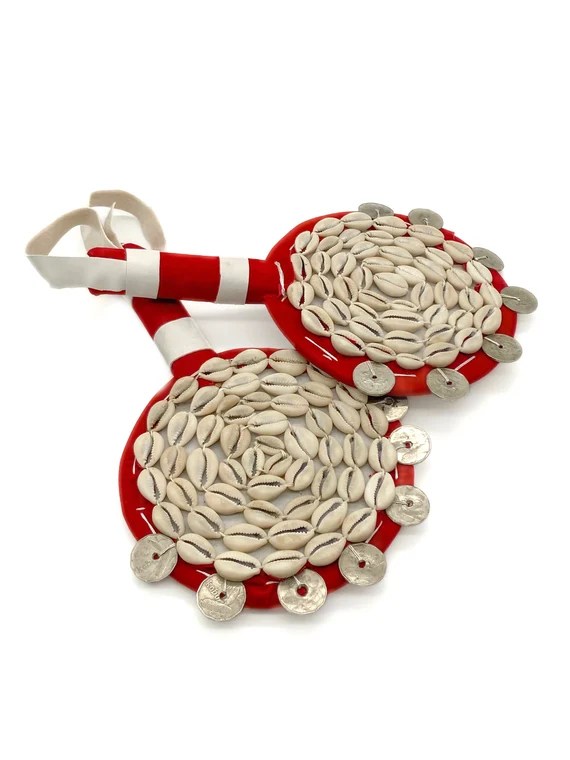
JuJu Apothecary Grand Opening Announcement

FOR IMMEDIATE RELEASE

JuJu Apothecary Grand Opening at Monarca Art Space in Kansas City’s Historic West Bottoms

Kansas City, MO – March 16, 2025 – JuJu Apothecary is thrilled to announce its grand opening will be on Friday, April 4, 2025, at Monarca Art Space, located in the heart of the Historic West Bottoms. This enchanting new space, dedicated to mystical and magical arts, will offer tarot readings, astrology readings, and an array of carefully curated magical items.

Located at 1225 Union Avenue, Kansas City, Missouri 64101, JuJu Apothecary will be open Thursday through Sunday from 12:00 PM – 5:00 PM, with extended hours until 9:30 PM every First Friday of the month to celebrate Kansas City’s vibrant arts and culture scene.

At JuJu Apothecary renowned mystic Yeye Dani will be available to offer tarot, astrology, and intuitive psychic readings, guiding visitors through spiritual insight and celestial wisdom. The Public will also have the opportunity to explore a selection of handcrafted spiritual tools, ritual supplies, and other magical offerings designed to support personal transformation and well-being.

Monarca Art Space, known for its dedication to cultural expression and artistic collaboration, provides the perfect setting for JuJu Apothecary to thrive. The Historic West Bottoms, with its rich history and dynamic creative energy, serves as an ideal backdrop for this mystical endeavor.

Join us for a magical experience on April 4, 2025, and be among the first to explore the wonders of JuJu Apothecary. Whether you are seeking insight, guidance, or the perfect enchanted item, this space is designed to uplift and empower all who enter.

The party will be 5 – 9PM with two psychic readers ready to help you with your spiritual journey! Guest reader: Bokonu Lee

For media inquiries, interviews, or further information, please contact:

Yeye
JuJu Apothecary
Call or text 912-657-4398
Email: yeyethemysticdiva@gmail.com

http://www.themysticdiva.com

Follow us on social media for updates and sneak peeks:

Exploring Nostradamus: A Dive into His Predictions

Nostradamus, born Michel de Nostredame in 1503, was a French apothecary and astrologer famous for his cryptic predictions in “Les Prophéties.” Many interpret his quatrains as foretelling significant historical events, such as the Great Fire of London and World War II. His ambiguous style fuels ongoing debates about his prophetic abilities.

Hi Y’all! Lou here! Keeping on the topic of famous psychics, I wanted to start from the first Historic Psychic on my previous blog post, Nostradamus.

When it comes to famous prophets and seer’s, Nostradamus stands out. You might have heard his name in movies or TV shows, but who was he really, and why are his predictions still so famous? Let’s take a beginner-friendly dive into the world of this 16th-century French seer, whose cryptic writings have fascinated people for centuries.


Who Was Nostradamus?

Born Michel de Nostredame in 1503, Nostradamus was a French apothecary (kind of like a pharmacist) and astrologer. In 1555, he published Les Prophéties, a book filled with four-line poems called quatrains. These poems claimed to predict future events, and over time, many people have connected his writings to real-world happenings.

But here’s the catch: Nostradamus’ predictions are written in a very cryptic way. His poetic style, filled with metaphors and old French phrases, makes them open to interpretation. Some see his writings as proof of prophecy, while others think they’re just coincidences or clever guesses.


A Few Predictions That Seem to Have Come True

For beginners, the best way to understand Nostradamus is to look at some of the events people believe he predicted.

1. The Great Fire of London (1666)

One of Nostradamus’ quatrains says:
“The blood of the just will be demanded of London,
Burnt by fire in the year ’66.”

In 1666, a massive fire swept through London, destroying much of the city. Even though this happened over 100 years after Nostradamus wrote his poem, the mention of fire and the year ’66 seem spot-on.


2. The Rise of Napoleon Bonaparte

Another quatrain reads:
“An Emperor shall be born near Italy,
Who shall cost the Empire a high price.”

This is often linked to Napoleon Bonaparte, who was born on the island of Corsica (near Italy) and became one of Europe’s most famous leaders. Napoleon’s military campaigns changed history but also caused great destruction, making the “high price” line feel accurate.


3. The French Revolution (1789–1799)

Nostradamus wrote:
“From the enslaved populace, songs, chants, and demands,
While princes and lords are held captive in prisons.
These will in the future by headless idiots
Be received as divine prayers.”

This quatrain sounds like it’s describing the French Revolution, a time when the French monarchy was overthrown, and the guillotine became a symbol of the era. The “headless idiots” could refer to the many people executed during this period, including King Louis XVI and Queen Marie Antoinette.


4. World War II and Hitler

“From the depths of the West of Europe,
A young child will be born of poor people,
Who by his tongue will seduce a great troop.”

Many people link this to Adolf Hitler, the infamous Nazi leader born in Austria to a modest family. His speeches and charisma led to his rise to power, making the phrase “seduce a great troop” seem fitting.


5. The 9/11 Attacks

Another quatrain says:
“Earthshaking fire from the center of the Earth
will cause tremors around the New City.
Two great rocks will war for a long time.”

Some interpret this as Nostradamus predicting the 9/11 attacks on New York City, with the “two great rocks” symbolizing the Twin Towers. The connection isn’t perfect, but many find the parallels striking.


Why Are His Predictions So Famous?

For beginners, the key to understanding Nostradamus is this: his quatrains are vague. They don’t directly name people or places, which means people interpret them in different ways. Sometimes, his words seem to fit events perfectly—other times, not so much.

What keeps Nostradamus popular is the mystery. Did he really predict the future, or is it all about how we interpret his writings? That’s for you to decide!


How to Dive Deeper

If this has piqued your interest, try reading some of Nostradamus’ original quatrains (there are translations available online). You can also explore how different people interpret his work—it’s fascinating to see how his words spark debates even today.

See THIS LINKED paper from The University of Michigan
“The true prophecies or prognostications of Michael Nostradamus, physician to Henry II, Francis II, and Charles IX, kings of France and one of the best astronomers that ever were a work full of curiosity and learning”

What do you think? Could Nostradamus really see the future, or was he just really good at writing poetic puzzles? Let’s discuss in the comments!

Do you want to connect with the semi-famous psychic Yeye?

(SEE Post from 1/6/24 Famous Psychics Who Captivated History for the story behind “semi-famous”)

Yeye is based in Kansas City, Missouri, and if you would like to attend one of her workshops, learn about her Psychic AF Mentorship, or have a reading, we have lots of ways you can contact her!

Call or text 912-657-4398
Or email us at yeyethemysticdiva@gmail.com.

Or Fill out the form here: Contact Yeye

With warmth and curiosity,
Lou

Famous Psychics Who Captivated History

Lou shares a humorous encounter about Yeye being referred to as a semi-famous psychic, highlighting Yeye’s vibrant personality and client connections. The post explores notable historical psychics like Nostradamus and Edgar Cayce, emphasizing their impact and the public’s fascination with psychic phenomena as cultural icons extending beyond ordinary perception.

Hi Y’all! Lou here!

When we went to Long Beach NY back in September, Yeye and I were chatting with someone in our hotel lobby. They said “I know you are a semi-famous psychic…” and we thought that was really funny! There wasn’t any upset over it, we just had not considered Yeye as “famous” so we had a giggle over that.

But the truth is, Yeye is somewhat known in several regions now since she has spent a number of years living in Texas, New Orleans, Savannah, California, and now Mississippi. She isn’t a subtle person – and she is 100% full of delightful personality and caring for people. Between that, the pink hair and her signature eyelashes and fabulous makeup and adorable clothes… I think she is at the very least quite memorable!

Not to mention the clients she helps, they definitely remember her! I think we both feel like “memorable” is way cooler than “famous.”

It made me think of famous psychics and mediums through time, so I wanted a list! I removed names of people still living and just wanted this list to focus on some people that brought fame, and sometimes notoriety, to to the title “psychic” or “medium”.

Psychics have always captivated the human imagination, acting as intermediaries between the physical and spiritual realms. Whether celebrated or controversial, they have shaped history, inspired movements, and offered insight into the mysteries of existence. Here’s a look at some of the most famous psychics from different eras and what made their gifts extraordinary.

I’ll be posting more in-depth biographies of each of the ones below, because they are fascinating to me and I want to learn more about them, maybe you do too!


Nostradamus (1503–1566)

A name synonymous with prophecy, Michel de Nostradame, or Nostradamus, was a French apothecary and seer. His book Les Prophéties contains cryptic quatrains that some believe predict major world events, from the rise of Napoleon to the attacks on September 11, 2001. While skeptics dismiss his writings as vague, believers continue to find uncanny relevance in his words.


Edgar Cayce (1877–1945)

Known as the “Sleeping Prophet,” Edgar Cayce was an American psychic renowned for his health readings and spiritual insights. Cayce would enter a trance-like state, offering detailed diagnoses and remedies for illnesses, often involving natural remedies and lifestyle changes. He also spoke about reincarnation, ancient civilizations like Atlantis, and the interconnectedness of body, mind, and spirit.


Madame Helena Blavatsky (1831–1891)

A pioneering figure in the occult movement, Madame Blavatsky was the founder of Theosophy. She claimed to channel wisdom from spiritual masters and traveled extensively, studying esoteric traditions. Her works, such as The Secret Doctrine, explored metaphysical concepts, bridging Eastern and Western philosophies. Though polarizing, her influence on modern mysticism and spirituality is undeniable.


Jeane Dixon (1904–1997)

Jeane Dixon was one of America’s most famous psychics, known for her public predictions and syndicated astrology columns. She allegedly foresaw the assassination of President John F. Kennedy and other significant events. Dixon’s fame soared in the mid-20th century, though her accuracy remains a topic of debate.


Sylvia Browne (1936–2013)

A household name in psychic circles, Sylvia Browne built her career through books, TV appearances, and readings. She claimed to communicate with spirits and provide insight into past lives. While some criticized her predictions, her books, such as The Other Side and Back, offered comfort and spiritual guidance to millions.


Psychics as Cultural Icons

Whether revered or questioned, these psychics have left a lasting impact on society. They remind us of humanity’s enduring fascination with the unseen and the possibility that our existence extends beyond what we can perceive.


Do you want to connect with the semi-famous psychic Yeye? :)

Call or text 912-657-4398
Or email us at yeyethemysticdiva@gmail.com.

Or Fill out the form here: Contact Yeye

With warmth and curiosity,
Lou

Mystical Practices in Major Religions

Lou shares her journey of exploring mysticism beyond her traditional upbringing, discovering its presence in all religions. Mysticism seeks a direct experience of the divine and emphasizes themes like unity and transcending boundaries. The piece highlights various mystical traditions, illustrating the universal quest for deeper spiritual connection across cultures.

Howdy Y’all, Lou here! I know when I first started learning about mysticism, metaphysical ideas, and spiritual ideas beyond the way I was raised in my small Texas city, things mystical were sort of lumped in with “works of the devil” and it scared my friends whenever I studied something new. As a young adult in my 20’s, I had friends tell me that I shouldn’t read certain books or do worship a certain way. As I didn’t seem to “fit” the religion I was raised in, I just became more skeptical of everything and fully agnostic.

Now, I definitely agree with not practicing spells, rituals and such for things I have not studied and don’t understand at all, but I found it oppressive that people were trying to warn me about learning more about religions.

And as I got older the more I learned ALL religions, even the one I had been raised in, had elements of the mystical and all the magic interwoven since the beginning.

Mysticism is the heart of spirituality—the quest for a direct experience of the divine, a glimpse of the infinite, or a profound connection with the universe. It transcends cultural and doctrinal boundaries, weaving through different religions and philosophies like a golden thread. Though the specifics vary, mysticism universally seeks to uncover the sacred within and around us.

Mysticism in Christianity

Christian mysticism often centers on union with God. Saints like Teresa of Ávila and John of the Cross wrote of contemplative prayer and a transformative journey toward divine love. Their experiences, described as the “Dark Night of the Soul,” illuminate the struggles and ecstasies of spiritual ascent. Christian mystics frequently focus on meditation, fasting, and solitude to cultivate this connection.

Mysticism in Islam

Sufism, the mystical branch of Islam, emphasizes love and direct knowledge of God through the heart. Sufi poets like Rumi and Hafiz wrote lyrical verses about divine union, often symbolizing God as the Beloved. Whirling dervishes perform the Sema ritual, a meditative dance symbolizing the soul’s journey toward divine truth. Through music, poetry, and dhikr (remembrance of God), Sufis aim to transcend the material world and achieve closeness with Allah.

Mysticism in Hinduism

Hindu mysticism is deeply rooted in practices like yoga, meditation, and devotion (bhakti). The Bhagavad Gita and the Upanishads describe spiritual paths to liberation, including the pursuit of self-realization and unity with Brahman, the ultimate reality. Mystics such as Sri Ramakrishna and Paramahansa Yogananda taught that through inner stillness and disciplined practice, one can perceive the divine essence in all things.

Mysticism in Buddhism

Mysticism in Buddhism revolves around enlightenment—awakening to the true nature of reality. Zen Buddhism emphasizes zazen (seated meditation) as a path to insight, while Tibetan Buddhism integrates visualization and mantra chanting to transform consciousness. Mystics like the Dalai Lama embody this tradition, teaching that mindfulness and compassion lead to profound spiritual realization.

Mysticism in Judaism

Jewish mysticism, particularly Kabbalah, seeks to uncover the hidden meanings of the Torah and the universe. The Zohar, a foundational Kabbalistic text, explores the divine emanations (sefirot) and their influence on the world. Practices like meditative prayer, study, and chanting divine names aim to draw closer to the Infinite (Ein Sof), the unknowable source of all creation.

Mysticism in Indigenous Traditions

Many Indigenous spiritualities are inherently mystical, emphasizing the interconnectedness of all life. Vision quests, shamanic journeys, and ceremonies like sweat lodges create sacred spaces for communion with ancestors, spirits, and nature. These practices often include rituals, storytelling, and offerings, celebrating the divine in every aspect of the natural world.

A Universal Journey

Despite their differences, mysticism in every tradition shares a few key themes: the search for unity, the pursuit of transcendence, and the realization of an inner truth. Whether through prayer, meditation, or ritual, mysticism reminds us that the sacred is both beyond and within us.

As I continue exploring mysticism from various cultures, alone and with Yeye, I’m struck by its universality and beauty. It bridges divides, showing us that no matter our beliefs, we all yearn for connection and meaning. Mysticism offers a glimpse of that eternal truth—a reminder that the divine is always just a breath, a thought, or a heartbeat away.

If you are in Kansas City Missouri, and are interested in checking out some of Yeye’s workshops offering insights into mystical practices, please watch our workshop offerings here:

Yeye’s Current Metaphysical In Person Kansas City Workshops

With warmth & curiosity,
Lou

Contact Yeye for a reading, consultation on a party, or to talk about her Psychic AF Mentorship Program

Call or text 912-657-4398

email yeyethemysticdiva@gmail.com

Or Fill out the form here: Contact Yeye
Herbal “Root” Magic: Boost Your Spiritual Practices

Howdy, Y’all! Lou Here! Yeye teaches me about all sorts of woo-woo stuff. I asked her about magical herbs, and she told me some common ones everyone can find. I’ve heard (and used!) all except Mugwort myself. That one sounds particularly witchy.

1. Sage

  • Uses: Cleansing and purification.
  • Magical Properties: Sage is often burned to clear negative energy from spaces, objects, or people. It’s a staple in rituals for protection and spiritual clarity.

2. Lavender

  • Uses: Relaxation and peace.
  • Magical Properties: Lavender is known to promote calm and tranquility. It’s commonly used in love spells, to enhance restful sleep, or to soothe emotional stress.

3. Rosemary

  • Uses: Protection and memory.
  • Magical Properties: Rosemary is used to ward off negative energies, enhance memory, and boost mental clarity. It’s often included in rituals for healing and protection.

4. Cinnamon

  • Uses: Prosperity and success.
  • Magical Properties: Cinnamon is associated with attracting abundance, wealth, and luck. It’s also used in spells for protection and to raise spiritual energy.

5. Mugwort

  • Uses: Divination and dreams.
  • Magical Properties: Mugwort is frequently used to enhance psychic abilities and dream work. It is burned as incense or placed under pillows to encourage vivid and prophetic dreams.

These herbs have been in mystical practices for their strong energy and ability to enhance spiritual work, says The Diva. What are your experiences with them or other herbs?

If you want more information on how to enhance your own spiritual practice, with herbs or not, please reach out to Yeye!

If you are in Kansas City Missouri, and are interested in checking out some of Yeye’s workshops offering insights into current mystical practices, please watch our workshop offerings here:

Yeye’s Current Metaphysical In Person Kansas City Workshops

If you are in the Kansas City Metro Area and looking for someone to be your spiritual mentor and tell you all sorts of woo-woo stuff like this, contact Yeye! She also is available over the phone and on Zoom or Facetime!

Contact Yeye for a reading, consultation on a party, or to talk about her Psychic AF Mentorship Program

Call or text 912-657-4398

email yeyethemysticdiva@gmail.com

Or Fill out the form here: Contact Yeye
With infinite curiosity,
Lou

Mysticism Through the Ages – A Journey Across Cultures

Lou, a longtime friend of Yeye, The Mystic Diva, shares insights into the history of mysticism across various cultures, highlighting its role in connecting humanity to the divine and the universe. From ancient Egypt to modern New Age movements, she emphasizes the enduring quest for spiritual understanding and personal growth.

Howdy, Y’all! Lou here—manager and longtime friend of Yeye, The Mystic Diva. As I continue walking this incredible journey with Yeye, I’ve developed a deep curiosity for the mystical traditions and practices that have shaped cultures across the globe. Mysticism is the thread that connects human beings to the mysteries of the universe, bridging the physical and spiritual worlds in countless ways.

Today, I’m excited to share with you some of mysticism’s history as it has evolved across various cultures. From ancient civilizations to modern times, mysticism has played a vital role in humanity’s quest to understand the divine, the unseen, and the unknown.

If you are in Kansas City Missouri, and are interested in checking out some of Yeye’s workshops offering insights into current mystical practices, please watch our workshop offerings here:

Yeye’s Current Metaphysical In Person Kansas City Workshops

1. Ancient Egypt: The Roots of Mysticism

One of the oldest and most profound mystical traditions comes from ancient Egypt. Egyptian mysticism revolved around a deep connection to the gods, the afterlife, and the universe. The mysteries of the pyramids, the hieroglyphs, and the Book of the Dead all point to a culture deeply involved in spiritual practices designed to prepare the soul for its journey beyond death. Egyptian priests, who served as mystics and magicians, conducted rituals to honor gods like Isis, Osiris, and Ra, using their knowledge to bridge the material and divine worlds.

2. The Mysticism of Ancient Greece: Oracles, Gods, and Philosophy

In ancient Greece, mysticism was closely tied to philosophy and religion. The Greeks believed that the gods communicated directly with humans, often through oracles and seers. The Oracle of Delphi, where priestesses channeled messages from the god Apollo, is one of the most famous mystical sites in history. Greek philosophers like Pythagoras and Plato also explored mysticism through their study of metaphysics, the soul, and the nature of reality. Their work has influenced mystical thinking for centuries.

3. Jewish Mysticism: Kabbalah

Jewish mysticism, known as Kabbalah, began to develop around the 12th century in Southern Europe and the Middle East. Kabbalists believed that hidden knowledge about God and the universe could be accessed through deep meditation and study of sacred texts. The Zohar, the foundational text of Kabbalah, offers a mystical interpretation of the Torah, exploring the nature of the divine and the creation of the universe. The Tree of Life, a key symbol in Kabbalah, represents the ten aspects of God’s essence and is still a central figure in Jewish mysticism today.

4. Sufism: The Mystical Path of Islam

Sufism, the mystical branch of Islam, emerged around the 8th century and has been a powerful force in Islamic spirituality ever since. Sufi mystics seek direct, personal experiences with God through practices like dhikr (remembrance of God), meditation, and poetry. The famous whirling Dervishes of the Mevlevi Order use dance as a form of ecstatic meditation, aiming to unite with the divine. One of the most beloved figures in Sufism is the Persian poet Rumi, whose mystical verses on love and the divine have inspired people for centuries.

5. Hindu Mysticism: The Yoga of Enlightenment

Hinduism is a rich spiritual tradition with a long history of mystical practices, particularly through the practice of yoga and meditation. The Upanishads, ancient texts from India, delve into the mystical nature of reality, the self (Atman), and the ultimate reality (Brahman). Hindu mystics, or yogis, engage in deep spiritual practices to achieve moksha, or liberation from the cycle of birth and death. The mystical traditions of Tantra and Kundalini yoga also explore how individuals can awaken spiritual energy within themselves to achieve higher states of consciousness.

6. Indigenous Mysticism: Shamanism Across Cultures

Shamanism, one of the oldest forms of mysticism, is found in indigenous cultures around the world. From the Arctic Circle to the Americas, Africa, and Siberia, shamans serve as intermediaries between the human and spirit worlds. Through rituals involving drumming, chanting, and altered states of consciousness, shamans communicate with spirits, ancestors, and nature to heal, guide, and protect their communities. Shamanic traditions continue to influence modern mysticism, particularly in the areas of energy healing and spiritual journeying.

7. Christian Mysticism: The Path of Union with God

Christian mysticism has a rich history, particularly in the writings of saints and mystics who sought personal union with God. Figures like St. John of the Cross, St. Teresa of Avila, and Meister Eckhart explored deep mystical experiences, often through prayer, meditation, and visions. Christian mystics believed that through spiritual discipline, one could transcend the material world and enter into a direct relationship with the divine. Their works have greatly influenced Christian contemplative practices that continue to this day.

8. Tibetan Buddhism: Mysticism in the Mountains

Tibetan Buddhism is deeply steeped in mystical practices, particularly through the use of mantras, meditation, and visualization. The Tibetan tradition of Dzogchen is one of the most profound mystical teachings, aiming to reveal the true nature of the mind. Tibetan monks and practitioners use complex rituals and symbols, like mandalas, to connect with higher spiritual realms and accelerate their path to enlightenment. The Dalai Lama, as both a political and spiritual leader, embodies the mystical heart of Tibetan Buddhism.

9. The Mysticism of the Celts: Nature and the Otherworld

The ancient Celts, who lived in parts of Europe before the Roman conquest, practiced a form of mysticism deeply connected to nature and the spirit world. The Druids, their priestly class, were revered for their knowledge of the mystical powers of nature, the stars, and the seasons. Celtic mysticism involved the veneration of sacred groves, rivers, and other natural features, as well as an understanding of the Otherworld, a parallel spiritual realm where gods, ancestors, and spirits reside. Today, neo-pagan and Druidic movements continue to draw on this rich tradition.

10. The Mysticism of the African Diaspora: Vodou, Santería, and HooDoo

The African diaspora gave rise to unique forms of mysticism that blend African spiritual traditions with Catholicism and other influences. Practices like Vodou (Haiti), Santería (Cuba), and HooDoo (in the U.S.) center around honoring ancestors, communicating with spirits, and harnessing spiritual power to affect change in the physical world. These mystical practices were often a means of survival and empowerment for enslaved Africans and their descendants, offering them a way to maintain their spiritual identities in the face of oppression. Today, these traditions remain vibrant, offering spiritual guidance and healing to practitioners around the world.

11. Mysticism in the Modern Era: New Age Movements

In the 20th century, mysticism experienced a revival through the New Age movement, which combined elements from various mystical traditions with a focus on personal spiritual growth. New Age mysticism draws on astrology, Tarot, energy healing, and meditation, and has become popular for its emphasis on universal consciousness, self-awareness, and the power of intention. Today’s modern mystics incorporate both ancient wisdom and new spiritual tools to navigate the complexities of contemporary life.

Mysticism Today: Connecting the Past and Present

Mysticism has been a constant thread in human history, offering people a way to connect with the divine, understand the mysteries of existence, and find meaning beyond the material world. While the forms of mysticism have evolved over time, the core desire to transcend the ordinary and experience the extraordinary remains the same. In today’s world, we see an exciting resurgence of interest in mysticism, with people from all walks of life exploring ancient spiritual practices in new and creative ways.

If you’re interested in learning more or discovering how to incorporate mysticism into your life, reach out to Yeye! Whether it’s through Tarot readings, Ifa Beads, or spiritual coaching, Yeye is here to help you tap into the magic that surrounds us all.

With warmth and curiosity,
Lou

Contact Yeye for a reading, consultation on a party, or to talk about her Psychic AF Mentorship Program

Call or text 912-657-4398

email yeyethemysticdiva@gmail.com

Or Fill out the form here: Contact Yeye
Discovering Mysticism: A Journey Through Spiritual Practices

Lou, Yeye’s manager, shares insights into contemporary mysticism, highlighting practices like Tarot reading, astrology, Reiki, and shamanism that blend ancient wisdom with modern relevance. These traditions foster spiritual connections and personal growth. Lou encourages exploring these practices and finding a supportive mystical community to deepen one’s spiritual journey.

Hey, Y’all! Lou here—Yeye’s manager and close friend. As I continue exploring the mystical world alongside Yeye, The Mystic Diva, I’m constantly amazed by how alive and thriving mysticism is today. While ancient traditions have shaped much of what we know, many of these mystical practices are very much part of the modern world, adapted to fit contemporary life while maintaining their spiritual essence.

Today, I want to take you on a journey through some of the current mystical practices found around the world. Whether it’s in bustling cities or quiet retreats, mysticism continues to offer people a deeper connection to the spiritual forces that shape our lives.

1. Tarot Reading: A Global Phenomenon

Tarot cards have transcended their origins in Europe and become a worldwide tool for self-reflection and divination. People turn to Tarot to gain insight into their lives, asking questions about love, career, and personal growth. Modern Tarot readings have evolved to be both spiritual and therapeutic, helping people make sense of the complex emotions and experiences they encounter. Yeye herself practices this art and uses Tarot to connect with energies beyond the material world.

2. Astrology: Ancient Wisdom for Modern Times

Astrology has made a huge resurgence in recent years, and it’s more accessible than ever thanks to social media and mobile apps. From daily horoscopes to birth chart analyses, people are using astrology to understand themselves and their relationships on a deeper level. The beauty of astrology today is how customizable it has become—you can dive as deep as you want, from following moon cycles to studying the exact influence of planets at your time of birth. Many mystics, including Yeye, use astrology to offer guidance and help people align with the energies that affect their lives.

3. Reiki and Energy Healing: Tapping into the Universal Life Force

Reiki, an energy healing practice originating from Japan, is now a widely used mystical tool for balancing the body’s energies. Reiki practitioners believe that they can channel healing energy into a person to remove blockages and restore balance, promoting physical, emotional, and spiritual well-being. Whether in holistic wellness centers or online Reiki sessions, this practice continues to help people reconnect with their inner peace. Yeye knows amazing Reiki practitioners who integrate elements of energy healing in their practice, and can help you get in touch with someone who can offer you this service.*

4. Shamanism: Bridging Worlds in the 21st Century

Shamanic practices, rooted in ancient cultures around the world, are seeing a revival in modern times. Many seek out shamans or shamanic healers to guide them through soul retrieval, spirit journeys, or plant medicine ceremonies. In countries like Peru and the U.S., people participate in Ayahuasca or other sacred plant ceremonies to seek healing, guidance, or spiritual awakening. Modern shamans help individuals connect with the spirit world to heal trauma, gain clarity, and cultivate a sense of purpose.

5. Crystals and Sacred Stones: Energy in the Palm of Your Hand

Crystals have become a staple in modern mysticism, with people using them to harness specific energies for healing, protection, and manifestation. Whether it’s wearing crystal jewelry or creating crystal grids, the use of these sacred stones is a global phenomenon. Each crystal, from amethyst to rose quartz, is believed to vibrate with unique energy that can help in different areas of life, such as love, abundance, or intuition. Yeye frequently incorporates crystals into her spiritual work to amplify positive energies and help her clients connect to the mystical realm.

6. HooDoo and Conjure: Modern Folk Magic

HooDoo, a practice with deep African American roots, remains a powerful spiritual tradition in modern times. Often referred to as “conjure” and “root work,” this form of folk magic is centered on personal empowerment, using herbs, roots, and ritual tools to bring about desired outcomes. From candle magic to protection spells, practitioners use HooDoo to call upon the spirits, ancestors, and the natural world for guidance and aid.

7. Sufism and Ecstatic Mysticism: The Path of the Heart

In the Islamic world, Sufism remains a profound mystical path. Sufi practitioners engage in rituals like dhikr (the remembrance of God) and the famous whirling of the Dervishes to achieve ecstatic states and a deeper connection with the divine. This practice emphasizes love, unity, and the surrender of the ego. Sufi mysticism, though traditional, continues to influence people today who seek a personal, heartfelt connection with the divine, offering timeless wisdom in a modern context.

8. New Age Spirituality: A Blend of Mystical Traditions

The modern New Age movement is an eclectic mix of mystical practices, pulling from ancient teachings, Eastern spirituality, and metaphysical beliefs. This approach includes everything from past-life regression, channeling spirit guides, and using numerology to find deeper meaning in life. People are turning to New Age spirituality to explore meditation, manifestation, and the law of attraction. Yeye herself is inspired by many New Age principles, integrating them into her sessions to create a customized spiritual experience for each client.

9. Ritual and Ceremony: Marking Life’s Mystical Moments

Modern mysticism often involves creating personal rituals and ceremonies to mark significant moments or transitions in life. Whether it’s a new moon intention-setting ritual, a seasonal celebration like the equinox, or a personal cleansing ceremony, people are increasingly using rituals to connect with spiritual energies. These modern ceremonies blend ancient traditions with personal creativity, allowing individuals to honor life’s cycles in meaningful ways. Yeye excels in leading such ceremonies, infusing each one with her own mystical touch, from candle rituals to guided meditations.

10. Dreamwork: Navigating the Mystical Realms of Sleep

In mysticism, dreams are often seen as windows to the unconscious mind and spiritual dimensions. Dreamwork has become a popular practice, where individuals keep dream journals and seek to interpret the symbolic messages in their dreams. Lucid dreaming, where the dreamer becomes aware they are dreaming, is another technique people use to explore the dream world with intention. Many mystics today often use dream interpretation to uncover hidden messages, gain insight, and even heal through the symbolic language of dreams.

Embracing the Mystical in Today’s World

It’s fascinating to see how mysticism from ancient cultures continues to evolve and thrive in modern times. Whether you’re practicing Tarot, studying astrology, or setting up an altar with crystals, today’s mystical practices allow us to explore deeper connections with ourselves, others, and the universe.

Finding Your Mystical Community

One of the most fulfilling aspects of engaging in mysticism today is finding your tribe—your spiritual community. Whether you’re interested in astrology, Tarot, Reiki, or ancient rituals, connecting with like-minded souls can deepen your spiritual journey. Joining online groups, attending workshops, or participating in local spiritual circles allows you to share experiences, learn from others, and grow in your practice. In the Kansas City metro area, we have a vibrant and growing community of mystics, spiritual seekers, and healers. Whether you’re a seasoned practitioner or just beginning your journey, there’s a space for you to connect and flourish.

If you’re curious about how to incorporate some of these modern mystical practices into your life, reach out! Yeye is always excited to share her knowledge and help others connect with the mystical energies that surround us all.

If you are in Kansas City Missouri, and are interested in checking out some of Yeye’s workshops offering insights into current mystical practices, please watch our workshop offerings here:

Yeye’s Current Metaphysical In Person Kansas City Workshops

With warmth and curiosity,
Lou

Contact Yeye for a reading, consultation on a party, or to talk about her Psychic AF Mentorship Program

Call or text 912-657-4398

email yeyethemysticdiva@gmail.com

Or Fill out the form here: Contact Yeye
If you are a psychic, medium, tarot reader, tea leaf reader, astrologer, Reiki practitioner or other amazing mystical person in the Kansas City Metro Area we are all about building networks to help people!

Exploring Tarot: Major and Minor Arcana

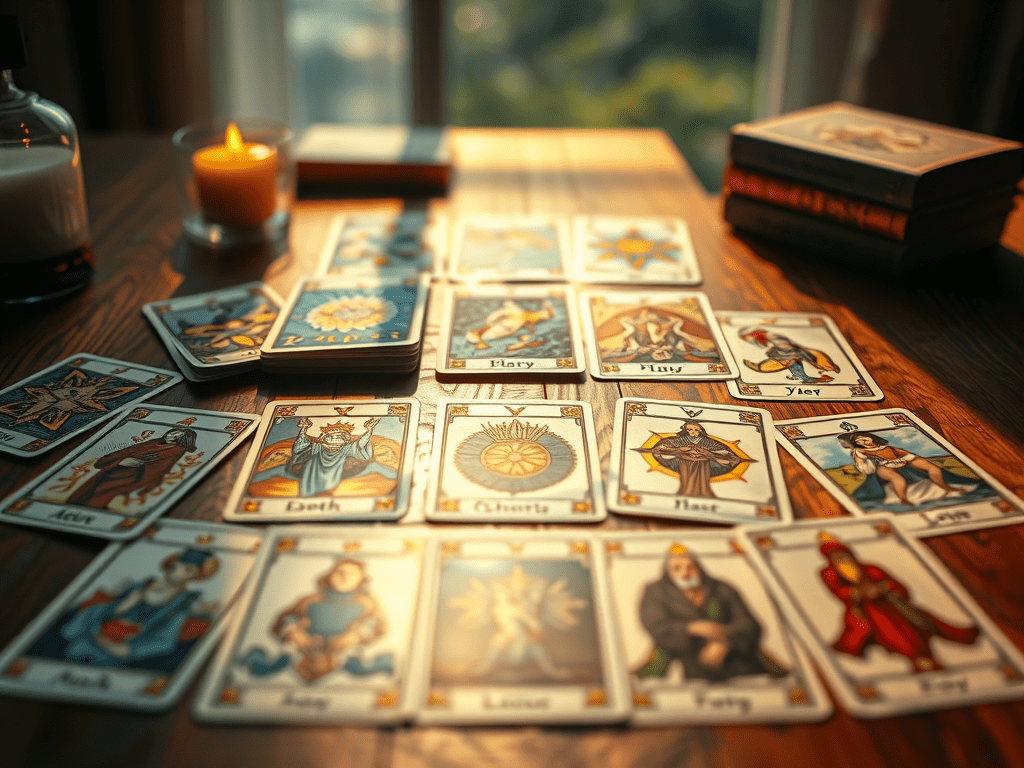
Hi Y’all! Lou Here. Yeye often uses tarot cards to divine messages from her ancestors. I think tarot cards are fascinating, and I think there is so much symbiology in the Rider Waite deck, I love to see how other tarot card makers incorporate the meanings into each. There are so many beautiful decks out there!

I feel this is the place to give a tarot 101 overview of the major and minor arcana of tarot cards. Sometimes people take creative license and make these into different characters/symbols, but from what I’ve seen overall, this represents most decks.

Major Arcana (The Path of Life)

The Major Arcana consists of 22 cards, each representing a significant stage or journey in life. These cards are often considered the most powerful and influential in a tarot reading.

  1. The Fool: Represents new beginnings, adventure, and taking a leap of faith.
  2. The Magician: Symbolizes creation, manifestation, and the power of willpower.
  3. The High Priestess: Represents intuition, mystery, and the subconscious mind.
  4. The Empress: Symbolizes fertility, abundance, and nurturing.
  5. The Emperor: Represents authority, structure, and control.
  6. The Hierophant: Symbolizes tradition, conformity, and spiritual guidance.
  7. The Lovers: Represents love, relationships, and choices.
  8. The Chariot: Symbolizes control, willpower, and overcoming obstacles.
  9. Strength: Represents courage, inner strength, and gentle power.
  10. The Hermit: Symbolizes solitude, introspection, and spiritual growth.
  11. Wheel of Fortune: Represents fate, destiny, and the cyclical nature of life.
  12. Justice: Symbolizes fairness, karma, and cause and effect.
  13. The Hanged Man: Represents sacrifice, surrender, and a new perspective.
  14. Death: Symbolizes transformation, endings, and new beginnings.
  15. Temperance: Represents balance, moderation, and patience.
  16. The Devil: Represents temptation, addiction, and limiting beliefs.
  17. The Tower: Symbolizes destruction, upheaval, and revelation.
  18. The Star: Represents hope, inspiration, and faith.
  19. The Moon: Symbolizes illusion, deception, and hidden truths.
  20. The Sun: Represents joy, success, and enlightenment.
  21. Judgment: Symbolizes rebirth, accountability, and spiritual awakening.
  22. The World: Represents completion, fulfillment, and integration.

Minor Arcana (The Journey of Everyday Life)

The Minor Arcana consists of 56 cards, divided into four suits: Wands, Cups, Swords, and Pentacles. Each suit represents a different aspect of life:  

  • Wands: Represents creativity, energy, and motivation.  
  • Cups: Represents emotions, relationships, and intuition.
  • Swords: Represents intellect, communication, and conflict.
  • Pentacles: Represents money, possessions, and practical matters.  

Each suit has 14 cards, numbered 1-10, and four court cards: Page, Knight, Queen, and King. These cards provide more specific details about the situation or event being interpreted.

Note: Tarot readings are a tool for self-reflection and personal growth. It’s important to use them responsibly and with an open mind. Don’t make important life decisions with tarot cards alone.

Would you like Yeye to explain more, or give you a reading?

Call or text 912-657-4398

email yeyethemysticdiva@gmail.com

Or Fill out the form here: Contact Yeye
With infinite curiosity,
Lou

Make it a Magical, Mystical, Woo-Woo Winter Season

Lou expresses a love for the winter holiday season while encouraging a mystical approach to celebrations. Suggestions include using crystal ornaments, creating sacred spaces, exploring traditions like Yule logs and wassailing, engaging in magical activities, and connecting with nature. The focus is on enhancing joy and spirituality during the holidays.

Embracing the Enchanting Side of the Holiday Season

Hey Y’all, Lou here! Yeye’s friend and accidental manager. I LOVE THE WINTER HOLIDAY SEASON! I love the magic and fairy lights, the hustle and bustle – I actually love working in retail environments around the holidays.

Winter is a time for traditions, family, and joy. But why not add a touch of magic, mystery, and the unknown to your holiday celebrations? Let’s dive into the mystical woo woo side of the winter season.

1. Decorate with Intention

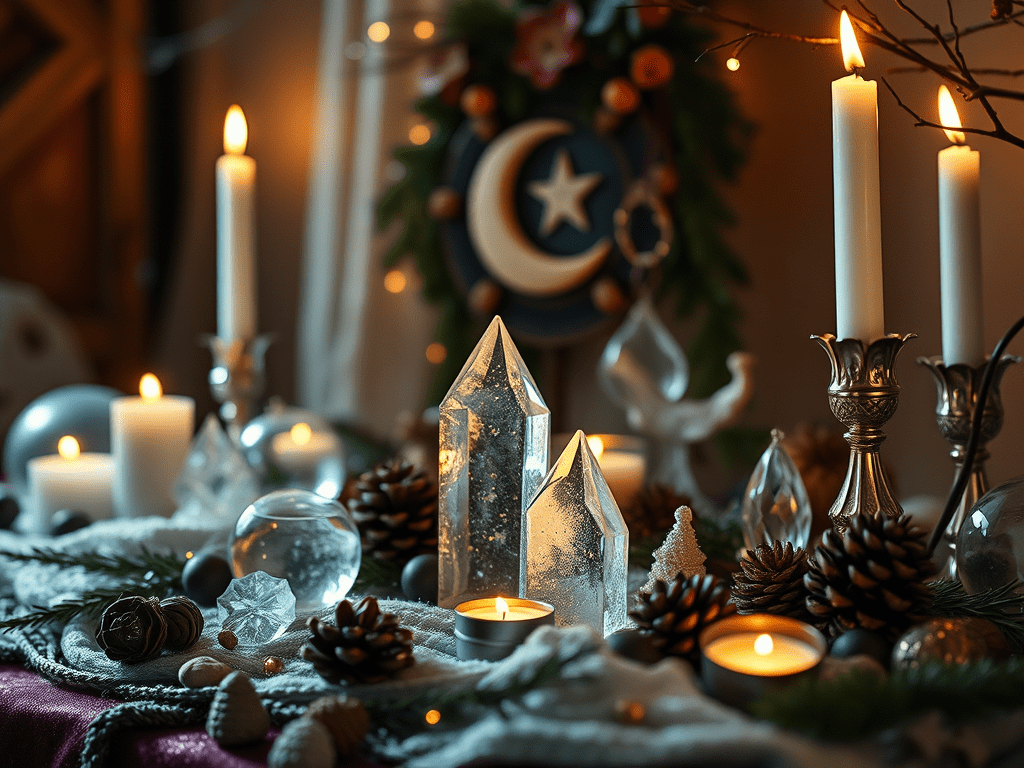
  • Crystal Ornaments: Adorn your tree with crystals to enhance the energy in your home. Each crystal has unique properties, so choose ones that align with your intentions.
  • Sacred Symbols: Incorporate symbols from various spiritual traditions into your decorations. This could include stars, moons, feathers, or dreamcatchers.
  • Nature-Inspired Elements: Bring the outdoors in with pine cones, holly, and other natural elements. These can add a grounding and earthy energy to your space.

2. Create a Sacred Space

  • Holiday Altar: Set up a special altar dedicated to the holiday season. Decorate it with candles, crystals, and symbols that resonate with you.
  • Smudging and Cleansing: Smudge your home with sage or palo santo to cleanse it of negative energy and create a sacred atmosphere.
  • Meditation and Mindfulness: Take time for daily meditation or mindfulness practices to connect with your inner self and cultivate a sense of peace and tranquility. Remember winters past, and share space with your ancestors.

3. Explore Mystical Traditions

  • Yule Log: Burning a Yule log is a traditional winter solstice practice that symbolizes the return of the sun and the rebirth of nature. It’s believed to bring warmth, prosperity, and protection.
  • Wassailing: Wassailing is a traditional English custom involving singing carols and drinking wassail (a fermented apple cider) to ensure a good harvest. It’s thought to ward off evil spirits and bring good fortune.
  • Candle Magic: Lighting candles is a common practice in many spiritual traditions. During the winter solstice, people often light candles to represent the returning light and to set intentions for the coming year.

4. Engage in Magical Activities

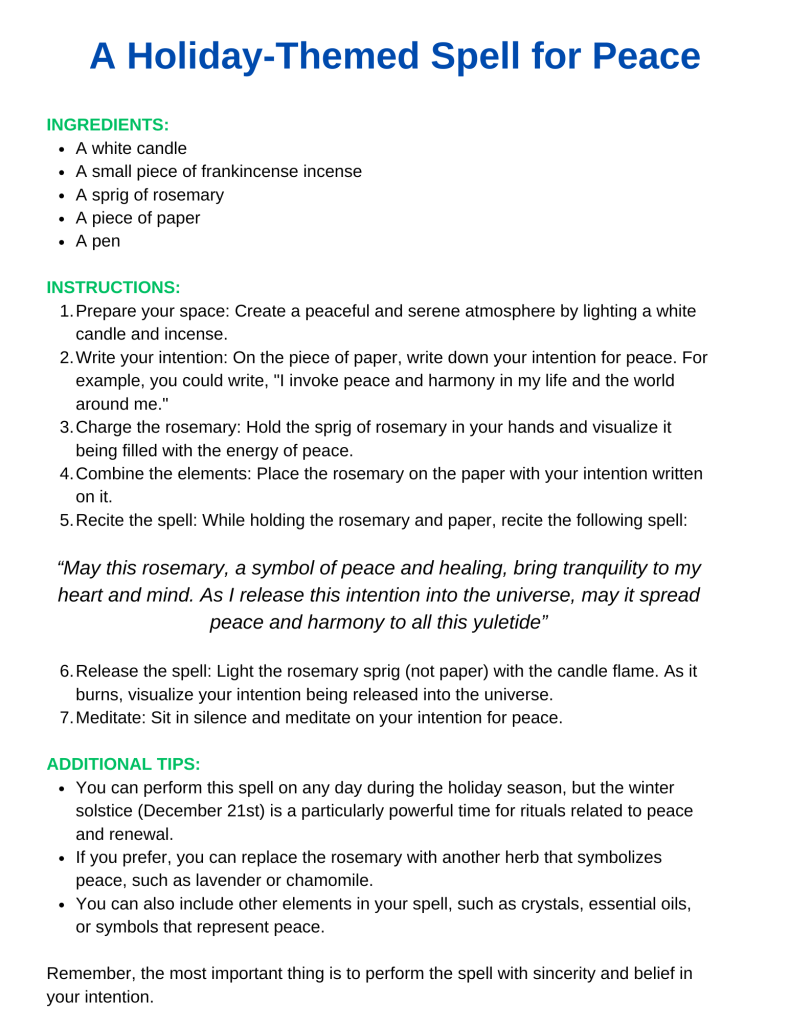
  • Spellcasting: Create your own holiday-themed spells for love, abundance, or peace. Here is Lou’s Holiday Spell for Peace:
  • Potion Making: Brew up magical potions using herbs, spices, and essential oils. Give a little juju as your holiday gifts!

5. Connect with Nature

  • Winter Solstice Celebration: Celebrate the winter solstice by spending time in nature. Go for a walk in the woods, stargaze, or simply enjoy the quiet solitude.
  • Nature-Inspired Rituals: Perform rituals that connect you to the natural world, such as offering gratitude to the trees or honoring the moon.

By incorporating mystical woo woo elements into your winter celebrations, you can create a truly magical and memorable experience. Remember, the most important thing is to have fun and connect with your own unique spirituality.

Would you like Yeye to help you incorporate more woo-woo in your celebrations?

Call or text 912-657-4398

Or email us at yeyethemysticdiva@gmail.com.

Or Fill out the form here: Contact Yeye
With much holiday splendor,
Lou

Discovering Egbe: Connect with Your Spiritual Family

Lou invites participants to a workshop on December 16, 2024, focusing on Egbe, our spiritual family in Ifa spirituality. The two-hour session offers insights into maintaining connections with Egbe, guided meditation, and practical tips for daily practice. It’s designed for anyone curious about Ifa or seeking deeper spiritual ties.

Hey, Y’all! Lou here! Yeye is an Ifa Priestess, and she is wanting to share her traditions with you. We are announcing another in-person workshop geared towards people wanting to learn more about Ifa, different spiritual traditions, and how ancestor work throughout the world plays a big part in helping us ground.

As the year winds down and we reflect on the journey we’ve traveled, there’s no better time to deepen our connection with the unseen forces that guide and support us. For those of us exploring spiritual traditions like Ifa, understanding Egbe—our spiritual family—can bring profound clarity, balance, and a sense of belonging.

Egbe is a concept rooted in Yoruba spirituality, representing the spiritual companions who walk with us, influencing our lives in both seen and unseen ways. They are said to be a part of our spiritual lineage, guiding and supporting us on our earthly journey. But like any relationship, maintaining a connection with Egbe requires intention, respect, and care.

Many people feel the pull of Egbe without realizing it: the inexplicable sense of homesickness, a longing for community, or dreams filled with messages we can’t quite decode. Reconnecting with Egbe can provide answers to these feelings, helping us navigate life with greater alignment and purpose.

That’s why I’m excited to invite you to my upcoming workshop, “Understanding Egbe in Ifa Spirituality,” happening on December 16, 2024. This two-hour session is designed for anyone curious about Egbe, whether you’re new to Ifa or looking to deepen your spiritual practice.

Here’s what you can expect:
Insight into Egbe: Learn how your spiritual family influences your journey and how to recognize their presence in your life.
Guided Meditation: Experience a powerful exercise to connect with your Egbe and receive their guidance.
Practical Tips: Discover simple ways to honor and nurture your relationship with Egbe in daily life.

This workshop offers a supportive space to explore, ask questions, and take steps toward a deeper spiritual connection. Whether you’re feeling disconnected or just curious about Ifa practices, this is your opportunity to gain insight and create meaningful spiritual ties.

Spaces are limited, so I encourage you to sign up soon. Let’s close out the year by stepping into alignment with our spiritual family and creating a foundation of connection and support for the year ahead.

👉 Learn more about the workshop and reserve your spot for the December 16, 2024 workshop today

With continued curiosity,
Lou